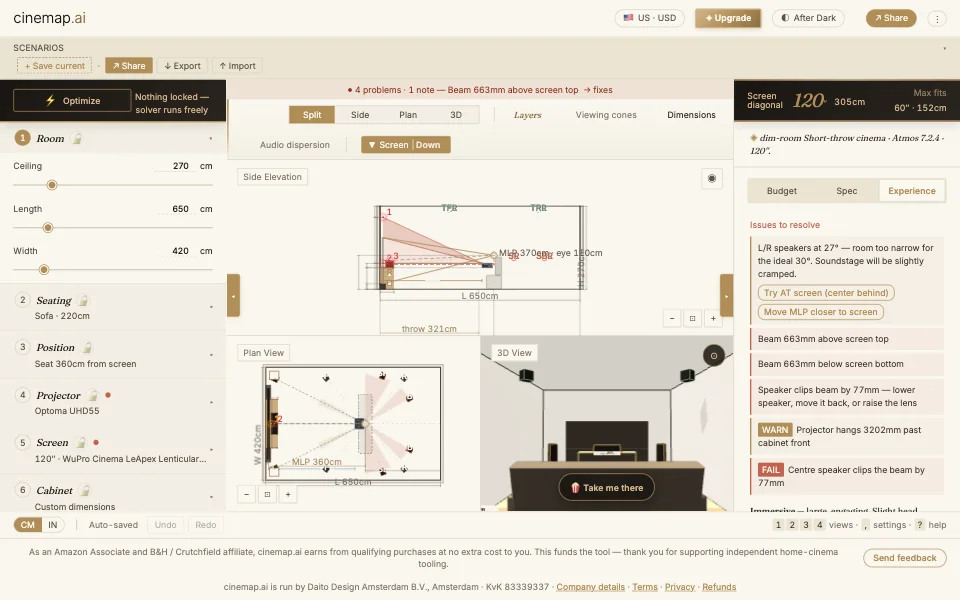
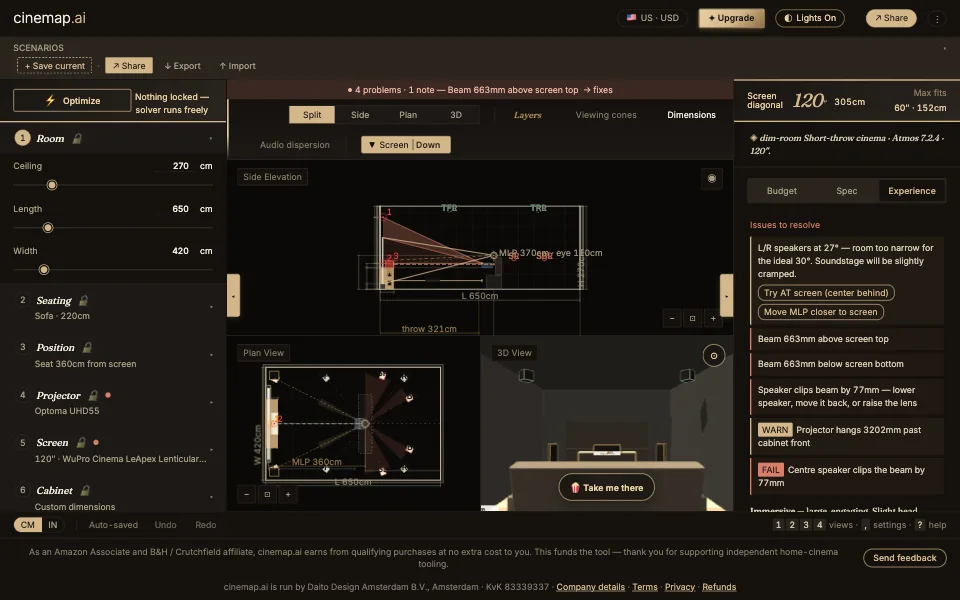
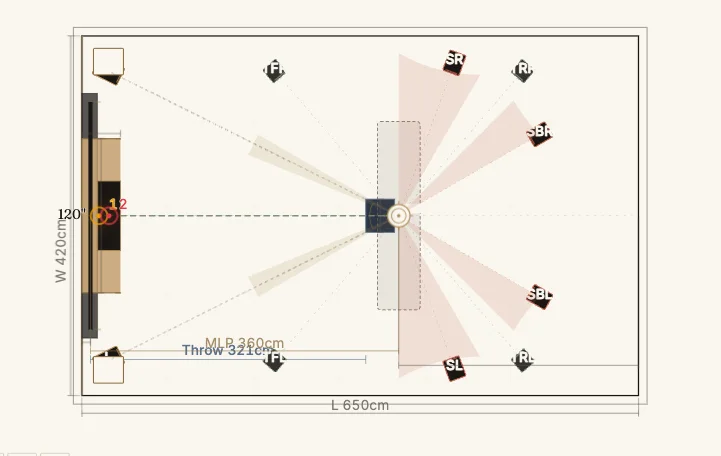
cinemap.ai is a precision geometry calculator for home theater builds. Enter your room, pick your gear, and the tool tells you — in real time — whether the projector fits, where the image lands, how bright it needs to be, and where the speakers go. Four synchronized views (side, plan, 3D, split), print-ready spec sheets, and affiliate links to actually buy the gear. No account required.
I built this on my own audio journey. Buying a house in the Netherlands took forever, and my wife only let me get a projector once we finally closed — EU homes run smaller than the Austin places I grew up around, so the geometry was tight from day one. The center channel I already owned is big and frankly a little stupid, and pairing it with a UST took weekend after weekend of pen, paper, calculators, and clunky 3D programs. Every six months I'd start over.
Eventually I got annoyed enough to build the tool I wished existed. cinemap is imperfect — it's grown out of how I actually think and feel about my own theater. If something here helps you, or if something is off, please tell me. I want to hear about your journey.
Peace. — J
Ceiling height determines projector compatibility. Room length sets viewing distance. Width sets speaker placement.
Cinema, TV room, or pure listening room — the tool adapts. Two-channel audiophiles, vinyl-only stereo nerds, and theatre maximalists all welcome.
Determines required projector brightness, screen ALR choice, or simply how forgiving the listening room is to nearby windows.
UST sits close to the screen. Long-throw fires from the back of the room.
Pick a tier or type any amount. You can change this later.
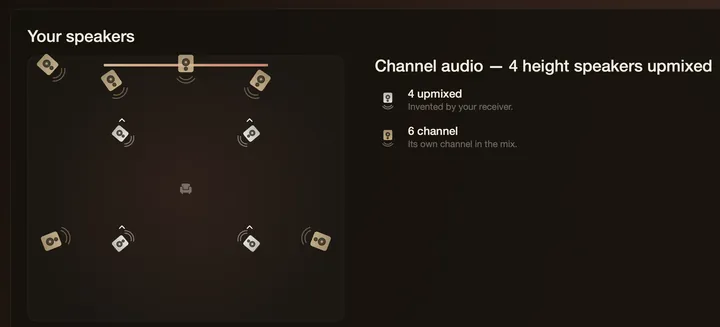
Drives speaker placement markers on the plan view.
Drag to reorder. Shapes recommendations.
cinemap.ai is a planning tool, not a guarantee. Geometry, brightness, and acoustic figures shown in this document are best-effort approximations based on third-party data — manufacturer product pages, published datasheets, retailer catalogs, and structured open databases.
Verify every dimension on-site before you buy. Manufacturer specs can be wrong, change between revisions, or list aspirational figures rather than measured ones. A 5 mm difference in cabinet depth or projector throw can mean the build won't physically fit. If a dimension on this sheet matters for your purchase decision, take a tape measure to the actual unit before committing money.
The end user is responsible for actual fit, performance, compatibility, and purchase decisions. Daito Design Group is not liable for purchases made based on this document, regardless of whether the underlying spec was scraped, manually entered, or user-submitted.
cinemap is not a substitute for a licensed installer, electrician, or structural engineer. Use this sheet as a starting point for those conversations, not as the final word.
Affiliate disclosure. Some gear links in the live cinemap.ai app go to retailer affiliate URLs. We earn a commission on qualifying purchases at no extra cost to you. The price you pay is identical whether you arrive via our link or any other route, and our gear rankings are not influenced by which retailer pays us most. Full policy: cinemap.ai/affiliate-disclosure.
Brightness, contrast, and acoustic figures are vendor-published. Real-world performance depends on room, content, and calibration. cinemap's RT60 calculation uses Sabine's formula with material absorption coefficients from a 22-material library and a +50% absorption factor for upholstered seating; results are estimates.
Compatibility flags shown on gear cards (UST + ALR matches, AVR channel counts, layout support, in-cabinet fit) are heuristics, not certifications. The final fit decision is yours.
Pricing in this document is illustrative — locale-converted, may exclude taxes/shipping/installation, and changes frequently. Confirm at checkout on the retailer's site.
Found an error? Tell us at hello@cinemap.ai — verified errors are corrected quickly and reporters are credited in the public changelog at cinemap.ai/changelog.